Never in the Same Room: The New American Collaboration That Doesn't Need One
There's a version of creative collaboration that lives in the movies. Two artists hunched over the same piano at 2 a.m., arguing about a chord change, spilling coffee on a lyric sheet, pushing each other until something clicks. It's romantic. It's cinematic. And for a lot of American artists right now, it's completely irrelevant.
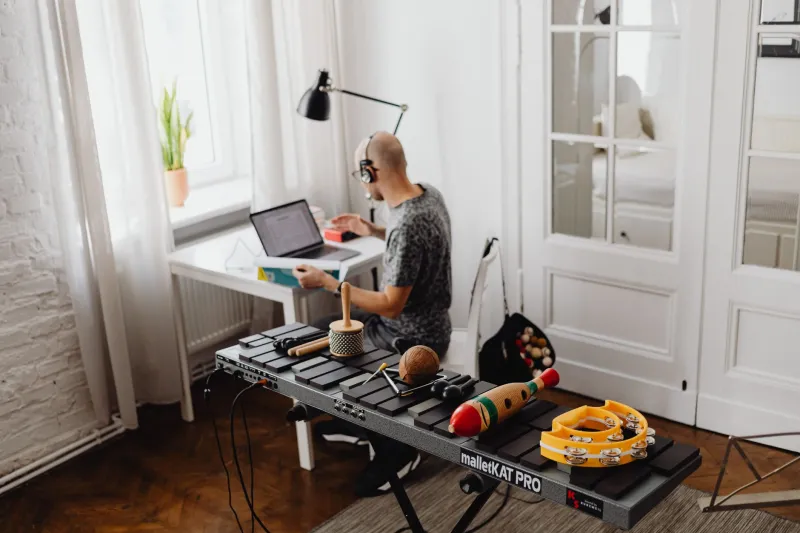
The real story looks more like this: a producer in Atlanta drops a folder of stems into a shared drive. A singer-songwriter in Portland opens it three days later, records a vocal take in her closet, and sends it back with a note. Nobody talks in real time. Nobody compromises in the moment. And somehow, the track that comes out the other side sounds like two people who've been finishing each other's sentences for years.
That's the collaboration paradox. The less these artists share physical space, the more they seem to share a creative brain.
The Myth of the Shared Studio
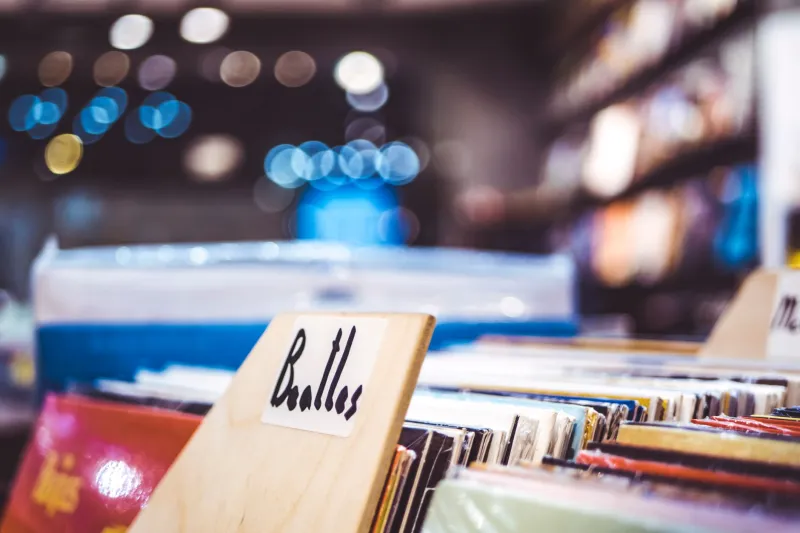
We've been sold a specific idea of what great collaboration looks like — and a lot of it traces back to legendary studio sessions that have been mythologized to the point of religion. Lennon and McCartney in a room. Marvin Gaye and the Motown house band, all locked in together. The image is powerful, but it's also become a kind of gatekeeping. If you're not in the same room, the thinking goes, you're not really collaborating. You're just exchanging files.
But here's what that framing misses: being in the same room creates its own kind of pressure. There's social gravity in shared space. You don't want to kill the energy, so you let something slide. You defer to the person with more confidence. You say yes when you mean maybe. Asynchronous work strips all of that away. When you're responding to someone's creative choices three states away and 48 hours later, you're responding to the work, not to the person.
That distinction matters more than people give it credit for.
How Geography Became a Creative Tool
For a lot of American artists, the pandemic didn't create this way of working — it just made it impossible to ignore. Forced out of shared studios and rehearsal spaces, artists who'd always assumed they needed to be together discovered they didn't. And some of them found that the distance actually improved the work.
Take the rise of what some producers are loosely calling "asynchronous albums" — records where the credited collaborators met in person maybe once, if at all, during the recording process. The finished product sounds unified because the artists involved developed a shared language over time: a mutual reference library, an agreed-upon emotional register, a shorthand built through hundreds of small exchanges that never happened face to face.
Geography stops being an obstacle when you treat it as a parameter instead. Some artists are deliberately choosing collaborators who are far away — not despite the distance, but because of what that distance forces. It requires you to be clearer. You can't rely on body language or the vibe in the room. You have to articulate what you're going for, and that articulation often leads you somewhere more specific than you would've landed otherwise.
The Intentional Isolation Play
There's a subset of this trend that goes even further — artists who are choosing to work alone together not because of geography, but as a deliberate aesthetic strategy. They're in communication. They might even be in the same city. But they're working in separate spaces, on separate timelines, and only merging at specific, intentional points.
The idea is that you protect your individual creative instinct longer. In a traditional collaboration, you're constantly negotiating. Every decision is a conversation. That can produce great work, but it can also produce averaged-out work — the result of two people meeting in the middle when one of them should've just gone further.
When you work in intentional isolation and only share at key moments, you bring a more developed version of your idea to the table. The collision, when it happens, is between two fully formed things rather than two half-baked impulses. The friction is more productive because both sides have more to stand on.
What Technology Actually Changed
It's easy to credit the tools — shared drives, high-quality remote recording setups, DAWs that make file exchange seamless — and stop there. But the tools are just infrastructure. What really shifted is the trust that American artists are placing in the process.
For a long time, handing off a half-finished track felt like handing off something vulnerable. You needed the other person to see your face while they heard it, to understand the context, to not misread the intention. Now there's a generation of artists who've grown up communicating creative ideas entirely through text and audio, and they're remarkably good at it. They've developed a fluency in asynchronous creative dialogue that older models of collaboration never required.
The result is a kind of collaboration that's slower in pace but faster in trust. You learn what someone's instincts are by watching what they do with your work when you're not around. That's actually a more honest read than watching them perform enthusiasm in a shared session.
Cohesion Without Consensus
Maybe the most counterintuitive thing about this model is what it does to the finished work. You'd expect records made this way to sound fragmented — like a collection of individual contributions rather than a unified piece. Sometimes that happens. But when it works, it works in a specific and interesting way: the seams are visible, but they're not weak points. They're part of the texture.
The best asynchronous collaborations don't try to hide the fact that two distinct sensibilities were at work. They let both voices stay intact and find the coherence somewhere underneath, in the shared emotional logic that brought the artists together in the first place.
That's not a lesser version of collaboration. That might actually be a more honest one.
The myth was always that great creative work required physical proximity. What it actually requires is genuine creative alignment — and it turns out you can build that from a thousand miles away, one shared folder at a time.