Late Bloomers: Why the Albums Nobody Wanted Are Now the Ones Everyone Needs
There's a particular kind of quiet devastation that comes with releasing your second album into the void. You survived the debut. You made it through the hype, the nervous energy, the beginner's luck. And then you made the thing you actually wanted to make — and the world collectively shrugged.
For a lot of American artists, that sophomore record became a locked room they stopped talking about. Critics called it unfocused. Labels called it uncommercial. Fans called it... nothing, because they weren't really listening. But here's what's interesting: some of those exact records are the ones people can't stop talking about now.
The Pressure Drop Between Album One and Album Two
Debut records carry a certain kind of freedom baked right into them. Nobody's watching yet — not really. You're building from scratch, pulling from years of stored-up ideas, and the stakes feel theoretical at best. But the second album? That's where the machinery kicks in. Labels want a hit. Fans want the first album again but different. Critics are sharpening their pens.
What ends up happening, weirdly, is that the second record often becomes the most honest thing an artist will ever make. The debut was a calling card. The third album, if they get there, is usually a course correction. But the second? That's the one where they had just enough confidence to get weird and just enough pressure to stop pretending.
That tension — between artistic freedom and commercial expectation — is where some genuinely strange and beautiful work gets made. And a lot of it got buried.
When the Audience Finally Shows Up
Take the slow-burn rehabilitation of records like Nelly Furtado's Folklore (2003) or D'Angelo's long-gestating second act — sophomore slumps that were reassessed years later as quietly radical. Or look at visual artists like Mike Kelley, whose follow-up gallery series after early critical breakthroughs were initially dismissed as too bleak, too strange, too much — and are now considered central to his legacy.
The pattern keeps repeating itself across American creative culture: the work that got skipped over tends to be the work that aged best. It wasn't made for the moment. It was made for whoever would eventually be ready for it.
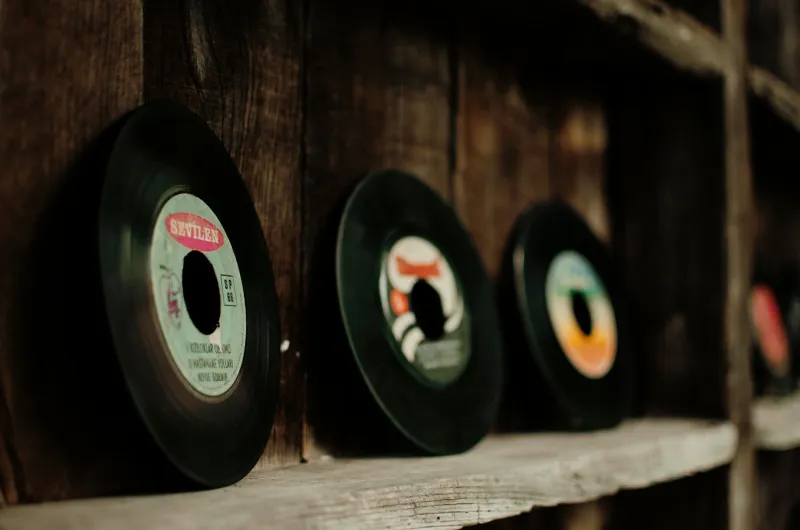
Platforms like Bandcamp and Spotify have quietly enabled a kind of archaeological listening culture. People dig. They follow rabbit holes. A mention in a Reddit thread or a TikTok snippet can surface a 2003 B-side to an audience of twenty-year-olds who weren't alive when it dropped. The algorithm, for all its sins, occasionally does something genuinely useful: it hands you something you didn't know you needed.
Reclaiming the Narrative
What's shifted recently is that artists themselves are getting in on the reappraisal. Instead of quietly moving on from the misunderstood middle chapter, some are actively pulling it back into the light.
Annie Clark — better known as St. Vincent — has talked openly about the underappreciated complexity of her earlier records, framing them not as missteps but as necessary experiments. Solange's Sol-Angel and the Hadley St. Dreams (2008) was largely overlooked on release and has since been recontextualized as a foundational text for a whole generation of R&B artists. Solange herself has leaned into that legacy rather than distancing herself from it.
There's something almost political about an artist choosing to stand behind the work that didn't perform. It's a refusal to let commercial reception define creative worth. And American audiences, increasingly skeptical of hype cycles, are responding to that kind of authenticity in a big way.
The Cult Audience as Co-Author
Here's a thought worth sitting with: when a record finds its audience ten years late, does it become a different record? Not literally, obviously — the tracks are the same. But context rewrites meaning in ways that feel almost physical. A song about disorientation hits differently when the world is actually disorienting. An album about alienation finds new resonance when alienation is the cultural water we're all swimming in.
The cult audience for a late-blooming record isn't just a passive recipient. They're active participants in building the record's meaning. They write the fan essays. They make the playlists. They bring the record into conversations it was never originally part of. In that sense, the audience becomes something close to a co-author — finishing a story the original release never got to tell.
This is especially true in visual art, where retrospective curation can completely reframe a body of work. A series of paintings that seemed scattered and self-indulgent in 2005 might read as visionary and prescient in a 2024 group show. The work didn't change. The frame did.
What This Means for Artists Making Things Right Now
If you're an artist — musician, painter, filmmaker, whatever — sitting on a second project that got ignored, this moment might be worth paying attention to. The infrastructure for rediscovery has never been more accessible. The appetite for depth over novelty is genuinely growing. People are tired of the churn.
More importantly, the critical establishment's first take is not the final word. It never really was, but now there's actual evidence of that. The records and series and collections that got written off as difficult or uncommercial are finding second lives with audiences who are actively seeking out exactly that kind of uncompromised work.
There's also something freeing about releasing a project into the world and accepting that its moment might not be this moment. Some things need time to find their people. That's not failure. That's just a longer arc.
The Unguarded Moment Is the Lasting One
What all of these late-blooming second acts have in common is that they were made without a safety net. The debut bought the artist a little time, a little credibility, a little rope — and then they used it to make something true rather than something safe. That's the risk. That's also the reason those records last.
The sophomore slump, as a concept, assumes that the second effort is somehow lesser. But more often than not, it's just earlier — ahead of the audience, ahead of the cultural conversation, ahead of whatever moment it needed to land in.
When that moment finally arrives, it doesn't feel like a correction. It feels like the record was always waiting. Patiently, quietly, for exactly the right ears.