Made for Nobody, Loved by Everyone: 7 American Creatives Whose Side Projects Changed Everything
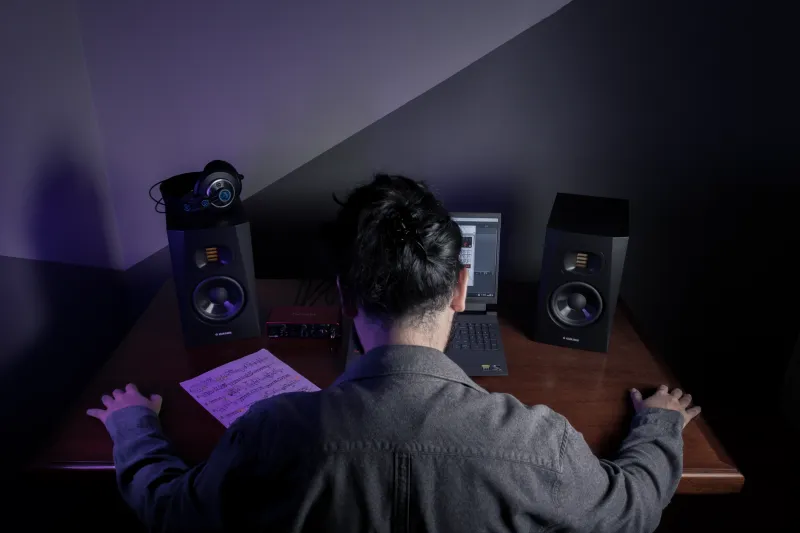
There's a paradox at the heart of creative work that doesn't get talked about enough: the moment you stop performing for an audience is often the moment you finally make something worth watching. Side projects — the ones started in spare bedrooms, during lunch breaks, or in the margins of a paying gig — have a way of cutting through all the noise because they carry zero obligation. No label. No client. No algorithm to feed. Just the thing itself.
Here are seven American artists, musicians, and multi-disciplinary creatives who found their most honest, most lasting work somewhere the spotlight wasn't pointing.
1. The Musician Who Made an Album for His Dad
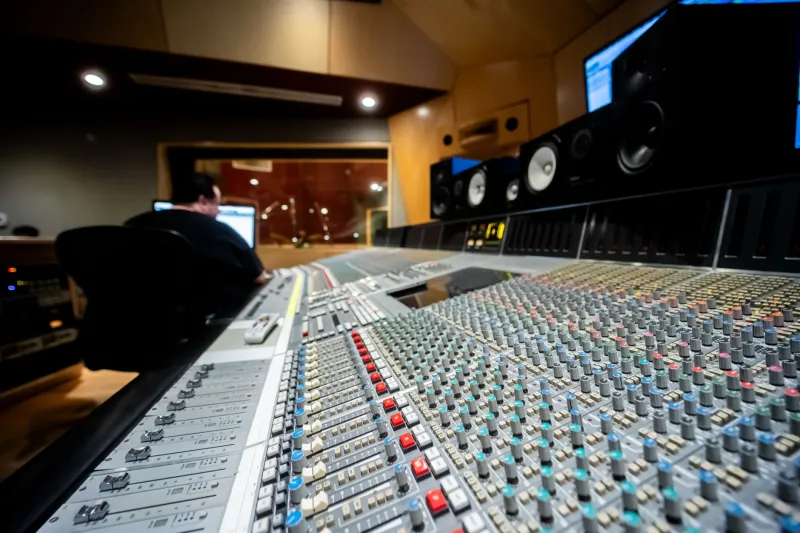
Marcus Veale spent most of his career as a session guitarist in Nashville, playing on records you've heard but never credited him for. His name in the liner notes, his sound in your ears, his identity nowhere in the room. In 2018, after his father passed away, he started quietly recording guitar instrumentals on a four-track recorder his dad had left behind — not for release, just to process the grief.
He uploaded the recordings to Bandcamp almost as an afterthought. Within six months, the album had been streamed over a quarter-million times and featured in independent film scores across the country. The turning point was simple: he stopped making music for the room and started making it for one person who was no longer there.
2. The Animator Who Drew in Secret
Priya Nath worked as a motion graphics artist for a major advertising agency in Chicago for eight years. Clean lines, brand guidelines, client approvals. On weekends, she drew something completely different: dense, hand-inked comics about her grandmother's immigration story, full of cultural specificity and visual chaos she'd never get approved in a boardroom.
She posted them on Instagram with no promotion strategy, no hashtag game plan. The response was overwhelming — not from brands or industry contacts, but from South Asian diaspora communities across the US who recognized something true in her work. Her comics were eventually compiled into a self-published collection that sold out three print runs. She left the agency the following year.
3. The Rapper Who Started a Podcast Nobody Was Supposed to Hear
Darnell "Coupe" Washington had a regional following as a rapper out of Atlanta, enough to keep the shows coming but not enough to crack the mainstream. In 2020, stuck at home during the pandemic, he started a low-fi audio journal — just him talking into his phone about music, memory, and growing up in the South. He called it Coupe Talks and shared it with maybe thirty people.
Those thirty people told thirty more. By the end of 2021, the podcast had a devoted listener base of over 80,000, and collaborators were reaching out because of the depth and honesty of his voice — not his bars. His subsequent music shifted too, becoming more narrative and less commercially angled. The side project rewrote his entire creative identity.
4. The Filmmaker Who Pointed the Camera at Her Block
Tanya Roussel studied film at NYU, graduated into the indie festival circuit, and spent several years chasing funding for ambitious narrative features. The grants kept not coming. One summer in New Orleans, broke and frustrated, she started filming her neighborhood with a consumer camcorder — no script, no crew, just her and the block she'd grown up on.
The resulting documentary, assembled over two years in her spare time, premiered at a small regional festival and was picked up by a streaming platform focused on documentary work. Critics called it the most authentic portrait of contemporary New Orleans in recent memory. It wasn't the film she'd planned to make. It was the one she couldn't stop herself from making.
5. The Producer Who Started Making Music for Plants
Okay, hear me out on this one. Joel Faris, an electronic music producer from Portland, spent years making club-ready tracks for labels and sync licensing. In a moment he describes as "a genuine mental health crisis disguised as a creative experiment," he started making long-form ambient compositions that he played through a speaker system he'd set up in his apartment garden.
He started a Patreon for the project — Greenhouse Sessions — with almost no expectations. It now has over 4,000 paying subscribers who tune in monthly for music specifically designed to feel like watching something grow slowly. His club work still pays the bills. Greenhouse Sessions is what he talks about in interviews.
6. The Painter Who Made Art About Forgetting
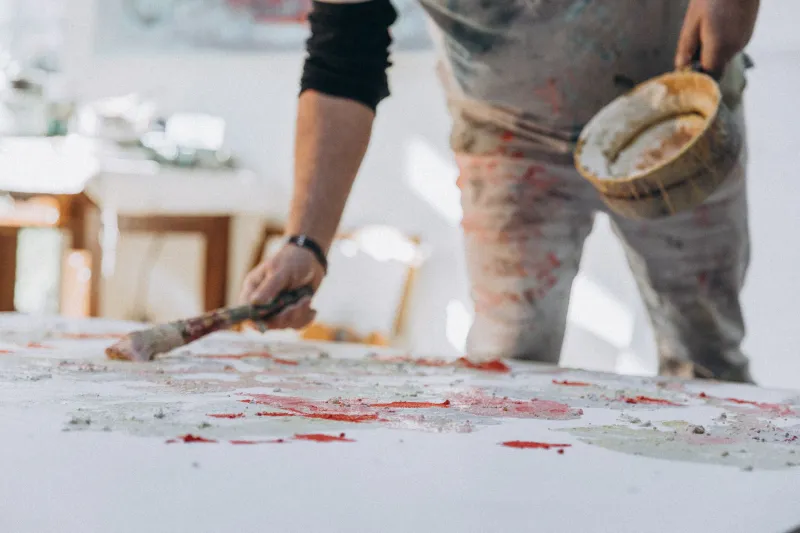
Ruth Ackerman, a Chicago-based painter whose large-scale commercial murals can be found in hotel lobbies and corporate offices across the Midwest, started a small personal project in 2019: tiny paintings, postcard-sized, depicting mundane moments she was afraid of forgetting. A specific quality of afternoon light. The exact way a particular diner booth felt. Her mother's hands.
She mailed them to strangers. No social media announcement, just a PO box address she shared in a single forum post. The response — hundreds of letters back, from people sharing their own mundane memories — became an art project in itself. A gallery in Minneapolis eventually mounted an exhibition around the correspondence. The paintings that were made for nobody found everyone.
7. The Singer-Songwriter Who Wrote Songs for Her Younger Self
Cassidy Lorne had a decade of solid indie folk releases behind her, a loyal but modest following, and a growing sense that she was making music for an imagined audience rather than from any genuine internal place. The pivot came when she decided to write a song for her twelve-year-old self — just one, as a private exercise.
That one song became an album. Twelve was recorded in her living room in Asheville, North Carolina, with no producer and no budget, and released with a one-paragraph note explaining what it was. It became her most-streamed, most-discussed record by a wide margin. Not because it was her most polished. Because it was the first time she stopped worrying about who was listening.
The Pattern Is the Point
Look across all seven of these stories and the throughline is hard to miss. The work that cuts deepest is almost never the work that was designed to cut deep. It's the work that started as something private, something necessary, something made because the artist couldn't not make it.
There's no formula for replicating that. But there's a lesson in it — one worth sitting with the next time you feel the urge to optimize your creative output for maximum visibility. Sometimes the most powerful thing you can do is put the audience aside entirely and just make the thing that's actually true.
The devoted following tends to find it eventually. It always does.