Broken on Purpose: Why American Creatives Are Falling in Love With the Flaw
There's a quiet rebellion happening in studios, basements, and darkrooms across America — one that smells like fixer fluid and sounds like a guitar that's slightly out of tune. A growing wave of US artists is making a deliberate choice to keep things rough, real, and unapologetically imperfect. And honestly? It might be the most radical thing happening in creative culture right now.
We live in an era of relentless polish. AI tools can smooth a portrait into something that looks like it was lit by a thousand angels. Mastering plugins can make a bedroom recording sound like it came out of Abbey Road. Auto-tune, content-aware fill, algorithmic color grading — the infrastructure of creative perfection has never been more accessible. So why are some of the most interesting American artists running the other direction?
The Aesthetic of Resistance
Call it the ugly beautiful movement, call it lo-fi integrity, call it whatever you want — the core idea is simple: the flaw is the point. Not the accidental flaw that slips through in a deadline crunch, but the intentional, curated, philosophically committed flaw. The scratch on the film negative. The creak in the floorboard caught on the microphone. The illustration line that wobbles just enough to remind you a human hand drew it.
Photographer and installation artist Mara Olin, based out of Detroit, has been hand-processing her 35mm film in expired chemicals for the better part of a decade. The results are portraits streaked with amber halos and unexpected grain clusters — images that look like they've been through something. "I want the photograph to have a life before it reaches the viewer," she told me over the phone last spring. "If it looks too clean, it lies. My subjects aren't clean. Life isn't clean."
That sentiment — that hyper-polish is a kind of dishonesty — is showing up everywhere you look in American creative communities right now.
Sound That Bleeds
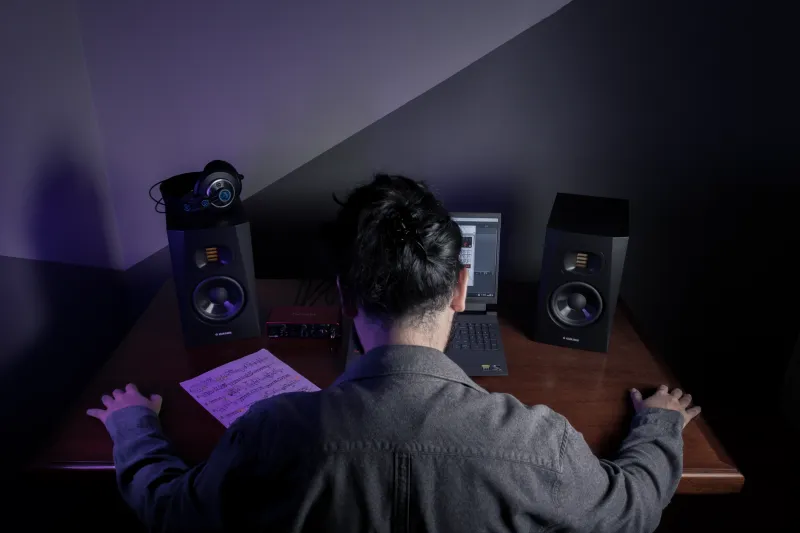
In music, the movement has its own texture. Brooklyn-based producer and multi-instrumentalist Dez Calloway has spent the last three years deliberately detuning his instruments by microtonal fractions before recording. Not enough to sound "wrong" to an untrained ear, but enough to introduce a subtle human wobble that digital tuning would normally eliminate. His last self-released record, Margin, was recorded entirely to cassette tape and features zero pitch correction.
"Everyone's terrified of the note that's slightly off," he said in a 2023 interview with an independent music blog. "But that slightly-off note is where the feeling lives. That's where you can tell someone actually played this."
It's worth sitting with that for a second. In a landscape where AI can now generate technically flawless music in seconds, the human imperfection isn't a bug — it's the entire value proposition.
Lo-Fi Illustration and the Hand That Shakes
Visual art is seeing the same push. Illustrators like Cass Merriweather out of Albuquerque have built substantial followings — think tens of thousands of engaged, genuinely devoted fans — by leaning into asymmetry, rough line work, and color that doesn't quite stay inside the lines. In a world of vector-perfect digital illustration, Merriweather's work looks almost aggressively handmade. Smudges are left in. Proportions are deliberately off. Backgrounds are sometimes just raw paper texture.
"People keep asking me if I've considered cleaning it up," she laughed in a recent studio walkthrough video. "That would ruin it entirely. The whole conversation I'm having with the viewer is: a person made this. A messy, imperfect person, just like you."
That connection — the one formed through shared imperfection — is something no amount of AI smoothing can replicate. And audiences are starting to feel the difference, even if they can't always articulate it.
Why Now?
It's not an accident that this philosophy is gaining traction in 2024 and beyond. The creative landscape has been flooded with content that is technically immaculate and emotionally hollow. Scroll through any major platform and you'll find images that are perfectly lit, perfectly composed, and somehow deeply forgettable. The algorithm rewards consistency and surface appeal. It doesn't know how to reward soul.
Filmmaker Jonah Pryce, who works out of Portland and shoots exclusively on Super 8 and 16mm, put it plainly: "The camera I'm using is older than my parents. It drops frames, it flickers, the exposure drifts. Every single one of those 'problems' tells the story better than any clean digital image could. I'm not going for vintage — I'm going for honest."
His short films have screened at regional festivals and developed a cult following online, not despite the visual roughness but because of it. People are hungry for work that feels like it was made by a human being who cared enough to struggle with it.
The Philosophy, Not the Aesthetic
Here's where I want to push back a little on how this movement sometimes gets framed. The ugly beautiful approach isn't about nostalgia for analog tools. It's not about rejecting technology wholesale. It's a philosophical stance about where the meaning in creative work actually lives.
Mara Olin still edits on a laptop. Dez Calloway uses digital audio software to mix his cassette recordings. The tools aren't the point — the intention is. The question these artists are asking is: what am I willing to lose in pursuit of perfection, and is that loss worth it?
For a growing number of American creatives, the answer is no. The wobble, the grain, the creak, the smudge — these aren't failures to be corrected. They're evidence of a human being doing something difficult and real. And in a creative landscape increasingly dominated by frictionless, algorithmically optimized output, that evidence might be the most valuable thing an artist can offer.
Keep it broken. Keep it honest. Keep it yours.