When the Music Runs Out: American Artists Building Worlds You Can See and Hear
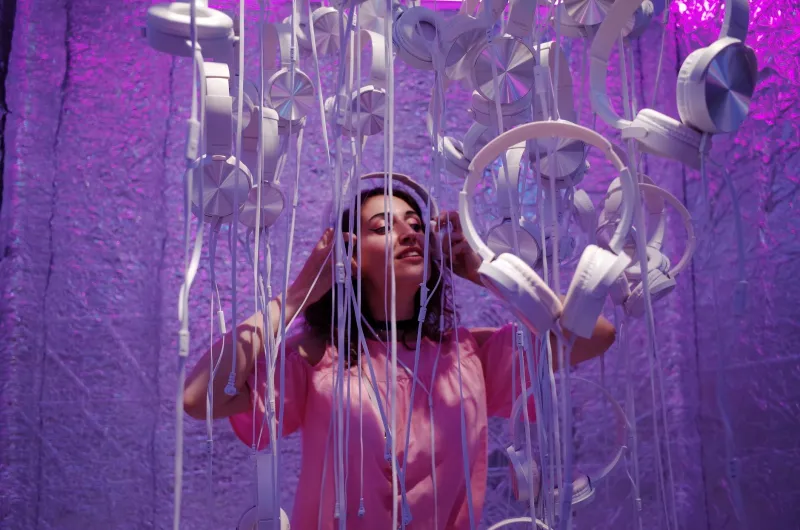
There's a moment some musicians describe — and it's hard to explain unless you've felt it — where a sound you've made starts pulling at something beyond itself. It wants a color. It wants a texture. It wants a room you can walk into. And no matter how good the mix is, no matter how perfectly the frequencies sit, the audio alone just doesn't close the loop.
That's not a failure of music. That's music telling you it needs a partner.
Across the US right now, a genuinely fascinating shift is happening among artists who came up through sound but have found themselves building outward — into visual art, film, installation, and experiential work that lives somewhere between a concert and a dream you half-remember. This isn't the classic musician-tries-painting side hustle. This is something more urgent and more integrated than that. These are creative visions where the sonic and the visual aren't two separate outputs — they're the same sentence written in two different languages.
The Idea That Couldn't Fit in a Track
Start with the basic premise: not every idea is audio-shaped. Some emotional states — grief that has gone quiet, joy that's almost uncomfortable, the specific loneliness of a crowded city — resist being captured in four minutes of recorded sound. They require duration, or space, or something physical that shifts as you move through it.
Artists who recognize this early tend to move fast. They start asking different questions. Not what does this sound like but what does this feel like when you're standing inside it. That reframe changes everything about how a creative practice grows.
Take someone like Martine Syms, who works at the intersection of video, performance, and conceptual art, weaving in sonic elements that feel inseparable from the visual logic of her pieces. Or consider the way Kahlil Joseph — a filmmaker and visual artist who has collaborated closely with musicians including Kendrick Lamar and Flying Lotus — constructs moving-image work that doesn't illustrate music so much as exist alongside it, as a parallel nervous system. The sound and the image aren't explaining each other. They're completing each other.
Immersion as Artistic Argument
One of the clearest signals that this shift is serious and not just trendy is how often these artists are choosing installation and immersive formats over more traditional exhibition or release models. A gallery show. A site-specific experience. A film that screens once in a converted warehouse and then lives only in the memories of the people who were there.
This isn't accidental. When you build something immersive, you're making a claim: that the work requires your whole body, not just your ears or your eyes. You're saying the meaning lives in the between — between the sound and the light, between what you see and what you feel vibrating in your chest.
Artist and composer Jlin, based out of Gary, Indiana, has spent years making percussion-driven electronic music that already feels architectural — like something you'd move through rather than just listen to. Her collaborations with choreographers and visual artists feel less like cross-disciplinary experiments and more like the natural completion of what the music was always reaching for. You hear her work and you want to see it move. You want to be inside it.
Similarly, the work of multimedia artist and musician Kelsey Lu consistently blurs the line between performance, visual composition, and emotional ritual. A Lu performance isn't something you watch from a safe distance. It rearranges the air in the room.
Why Now?
It's worth asking why this particular moment feels so charged with this kind of multi-sensory ambition. Part of it is technological — the tools for combining sound and image have never been more accessible or more sophisticated. But technology doesn't explain the urgency behind the work.
More likely, it's a response to how fragmented and surface-level so much media consumption has become. When everything is available everywhere all the time, the artists who want to make something that actually lands are reaching for depth and totality. They want to make work you can't skim. Work that holds you in place long enough for something real to happen.
There's also something to be said for the specific cultural moment American artists are navigating — politically fractured, emotionally exhausted, visually oversaturated. In that context, work that demands your full presence and offers something genuinely sensory and human feels almost radical.
The Risk of Going Bigger
None of this comes without friction. Expanding a creative practice from audio into visual or experiential work is expensive, logistically complicated, and professionally risky. The music industry and the art world have different economies, different gatekeepers, different languages for talking about value and success.
Artists who move between those worlds often find themselves partially legible in both and fully legible in neither — which, honestly, tracks with how the best creative work tends to position itself. Outside the comfortable center. Harder to categorize, harder to dismiss.
There's also the question of craft. Sound artists who move into visual work have to genuinely learn new skills, or find collaborators who bring complementary expertise. The ones who do it well tend to approach the visual side with the same rigor and patience they brought to learning their instruments or their production software. The ones who do it badly treat it as decoration, and the work shows it.
Experiencing One Without the Other
Here's the test that separates the truly integrated multi-sensory artists from the ones who are just stacking formats: can you remove one element and still get the full experience?
For the artists doing this at the highest level, the answer is no. Listen to the audio track without the visuals and something is missing — not just aesthetically but conceptually. Watch the video with the sound off and you lose the emotional spine of the piece. The two halves don't add up to a whole; they multiply into something that couldn't exist any other way.
That's the standard worth holding onto. Not does this musician also make interesting images but is this a work that genuinely requires both to mean what it means.
The American artists who are clearing that bar right now are doing some of the most compelling creative work in any medium. They're not expanding their brand. They're following their ideas into whatever space those ideas actually need to live — and trusting that the audience willing to go there with them is worth building for.
Some sounds are too big for speakers. Some visions are too deep for a single sense. The artists who know that — and build accordingly — are the ones worth paying attention to.