The Loudest Thing in the Room Is Nothing: How American Creatives Are Mastering Empty Space
Somebody once told me that the most powerful word in any conversation is the one you decide not to say. I've been thinking about that a lot lately, especially when I look at what some of the most interesting American artists are doing right now. They're not filling things up. They're carving things out.
Negative space — the deliberate absence of content in a visual composition, a musical arrangement, a sculptural form — has been a formal concept in art school curricula for decades. But something different is happening now. It's not an academic exercise anymore. It's becoming a full-on creative philosophy, and the artists leaning into it hardest are making some of the most quietly devastating work in the country.
Silence Isn't Empty. It Never Was.
Let's get one thing straight before we go further: negative space and absence are not the same thing. Absence is accidental. Negative space is engineered. It's the white around the ink. It's the two seconds of near-silence before a chorus drops. It's the corner of a room that a sculptor deliberately left untouched so your eye has somewhere to breathe.
The distinction matters because too many people — including a lot of well-meaning critics — still read emptiness in art as a kind of failure. Like the artist ran out of ideas or didn't finish the job. That reading is lazy, and it misses the whole point.
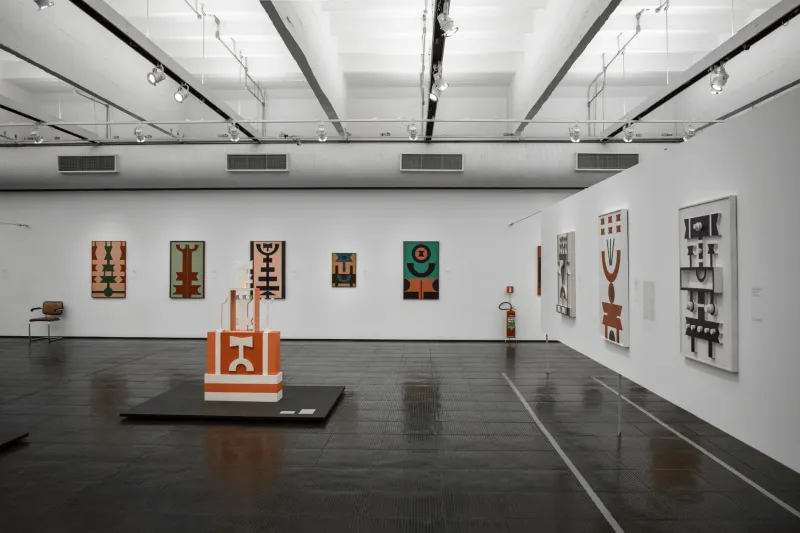
When you look at the minimalist sculpture tradition running through artists like Richard Serra or Anne Truitt, the space around the object is doing as much structural work as the object itself. The gap between two steel planes isn't dead air — it's tension. It's the place where your body and your imagination are invited to complete something the artist intentionally left open.
That's not absence. That's a very specific kind of invitation.
The Ambient Architects
Over on the music side, this philosophy has been baked into ambient and experimental sound for a long time — think early Brian Eno, think the long, deliberate silences in certain jazz recordings where the rest feels earned by what came before. But what's interesting right now is how that approach is filtering into genres and scenes that usually traffic in fullness.
There are producers working in indie, R&B, and even hip-hop who are stripping arrangements down to something almost uncomfortably sparse. Not because they can't fill the space — they absolutely could — but because they've realized that a single piano note sitting inside four seconds of room tone can hit harder than a wall of sound ever will. The listener's brain rushes in to fill the gap, and suddenly the emotional experience is collaborative. You're not just receiving the song. You're finishing it.
That shift in dynamic — from artist broadcasting to artist inviting — is a big deal. And it's a direct challenge to the cultural pressure that tells every American creative to maximize, to deliver, to give people their money's worth by cramming every available second with content.
The Pressure to Fill Everything
Let's be honest about where that pressure comes from. Social media metrics reward volume. Streaming algorithms favor frequent releases. The attention economy has trained audiences to expect constant stimulation, and it's trained a lot of artists to believe that if they slow down or leave space, they'll lose people.
Some will. That's real. Not everyone is ready to sit inside a quiet painting or a song that takes its time. But the artists who are building their practice around restraint aren't chasing that audience anyway. They're building something more durable — a body of work that rewards patience, that deepens on return visits, that doesn't exhaust itself in a single scroll.
There's a sculptor based out of the American Southwest whose large-scale outdoor installations are specifically designed around what she calls "breathing room" — zones within the piece where nothing is placed, where the landscape or the sky becomes part of the composition by default. She's talked in interviews about how visitors often spend more time in those empty zones than in front of the actual sculptural elements. The nothing, it turns out, is where people stop and feel something.
That's not an accident. That's craft.
Multidisciplinary and Unafraid
What's especially exciting is watching this philosophy move across disciplines in real time. Visual artists who also make music are applying negative space principles to sound in ways that trained musicians sometimes don't think to. Musicians who've started painting or doing installation work are bringing a rhythm-and-rest sensibility to visual composition that feels genuinely fresh.
When you work across multiple forms, you start to see that the underlying logic of restraint is universal. A rest in a musical score and a blank margin in a painting are the same idea expressed in different languages. They both say: stop here, feel this, let it land.
That cross-pollination is producing some of the most interesting American creative work happening right now, in studios and galleries and home recording setups from New York to Portland to rural Tennessee. Artists who refuse to be defined by a single medium are also, often, the ones who are most comfortable with strategic emptiness — because they've had to learn to communicate across multiple systems, and they've discovered that the pauses translate better than almost anything else.
What You Leave Out Is Your Signature
Here's the argument I keep coming back to: in an era of infinite content, the creative decision that takes the most guts is subtraction. Anyone can add. Adding is easy. Adding is what the algorithm asks for. But taking something away — sitting with the discomfort of empty space and trusting that it's doing work — that requires a specific kind of confidence that takes years to develop.
The artists who've figured this out tend to have a very clear sense of what they're actually trying to communicate, because you can't leave space purposefully unless you know exactly what you're surrounding. The emptiness only works when the presence is precise.
That's the real skill here. Not minimalism for its own sake. Not silence as an aesthetic pose. But a deep enough understanding of your own creative intention that you know exactly which parts to remove — and you trust the audience to meet you in the gap.
That trust is rare. And when you encounter work that has it, you feel it immediately. Something lands differently. The room gets a little quieter inside you.
That's the second language of creative work. Most people are still learning their first. But the ones who've cracked it? They're saying things that words — or notes, or brushstrokes — simply can't carry alone.
The empty space is the message. Learn to read it.