When Painters Start Making Noise: The American Visual Artists Rewiring Their Practice Through Sound
There's a moment, if you've ever stood inside a properly designed sound installation, where you stop trying to figure out what you're hearing and just let it happen to you. The room becomes the instrument. The air becomes the medium. And somewhere in the back of your head, a small part of your brain starts asking: who built this, and what were they thinking about when they did?
More and more often, the answer is someone who started out with a paintbrush.
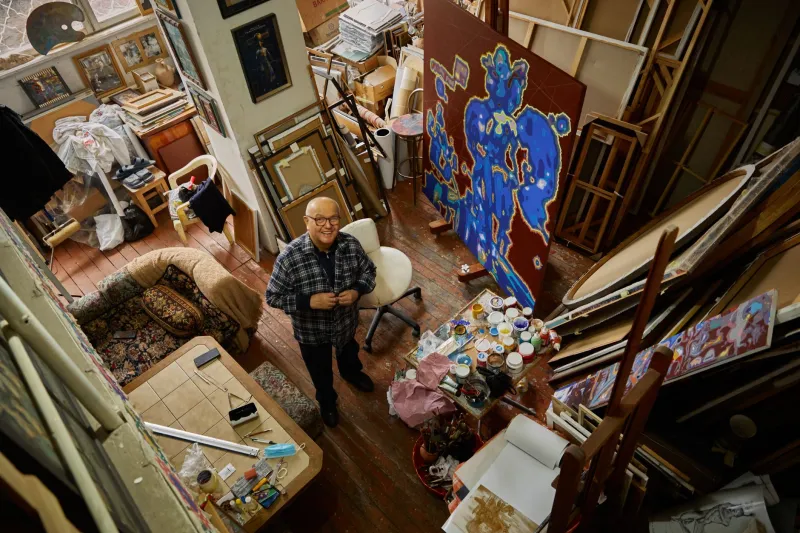
Across the country — from studio apartments in Brooklyn to converted warehouses in Detroit to sprawling desert spaces in New Mexico — American visual artists are making a deliberate, intentional pivot toward sound. Not dabbling. Not goofing around on GarageBand between gallery shows. We're talking about a serious, sustained crossing of disciplines that's producing work you genuinely can't categorize, and that's exactly the point.
The Direction Nobody Talks About
When we talk about artists working across disciplines, the cultural shorthand almost always runs in one direction: the musician who picks up a camera, the rapper who starts painting, the rock star who opens a gallery. That story has a familiar arc. It's romantic. It makes sense to us.
But the reverse — the visual artist who starts composing — gets far less airtime, and that's a shame, because something genuinely different is happening when someone trained in color theory and spatial relationships starts thinking about frequencies and silence.
Painters work with permanence, or at least the illusion of it. You make a mark, it stays. You build a composition across a fixed plane. The viewer's eye moves, but the image doesn't. When that same person starts working in sound, they're suddenly dealing with something that exists entirely in time. It appears, it changes, it disappears. There's no canvas to return to. The whole framework shifts.
That cognitive dissonance — between the fixed and the ephemeral — is where a lot of the most interesting work is being born right now.
Texture First, Everything Else Second
One of the most striking things about the sonic output of visual artists is how textural it tends to be. Ask a musician trained in traditional theory to describe their process and you'll often get talk of melody, rhythm, progression — the structural bones of composition. Ask a sculptor or a painter how they approach sound and the first word out of their mouth is almost always some version of texture.
That makes complete sense when you think about it. These are people who spent years thinking about the difference between matte and gloss, about how light hits a rough surface versus a smooth one, about the way a brushstroke carries physical weight. When they translate that sensibility into audio, they're not reaching for a hook. They're reaching for a surface. They want you to feel the sound the way you'd run your hand across something.
The result is often music — if you can call it that — that's almost aggressively non-narrative. There's no story being told in the conventional sense. There's just presence. Just material. Just the sensation of being inside something that was carefully, deliberately constructed to feel a certain way.
The Tools Are Finally Catching Up
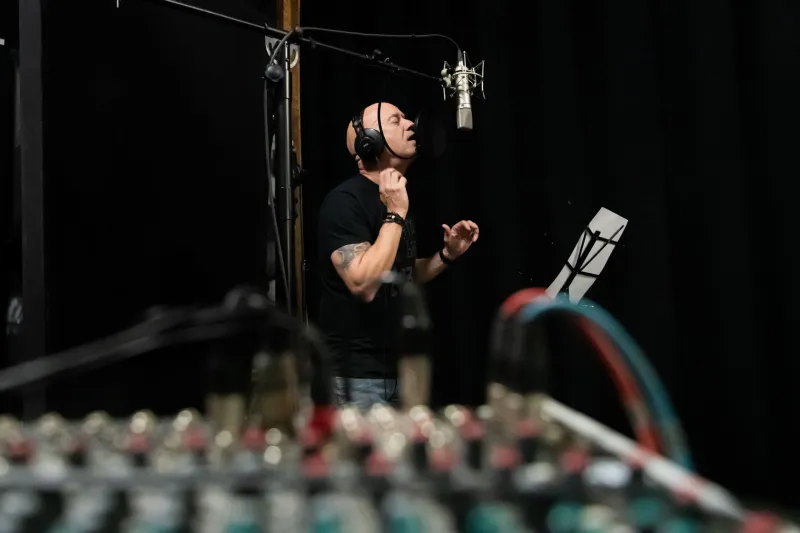
Part of what's making this moment possible is practical: the barrier to entry for audio production has dropped dramatically. You don't need a recording studio or a degree in music theory to start exploring sound design seriously. A decent laptop, a copy of Ableton or Logic, a cheap MIDI controller, and a pair of studio monitors will get you surprisingly far.
For visual artists — who are already used to learning new tools, new software, new techniques as a matter of professional survival — this accessibility is an invitation. And they're accepting it in large numbers.
What's interesting is that many of them aren't trying to make music in the conventional sense at all. They're treating audio software the way they'd treat a new medium. The same way you'd learn to work with encaustic or resin or neon tubing, they're learning to work with frequency and reverb and spatial audio. The goal isn't a song. The goal is an experience.
Installation as the Meeting Point
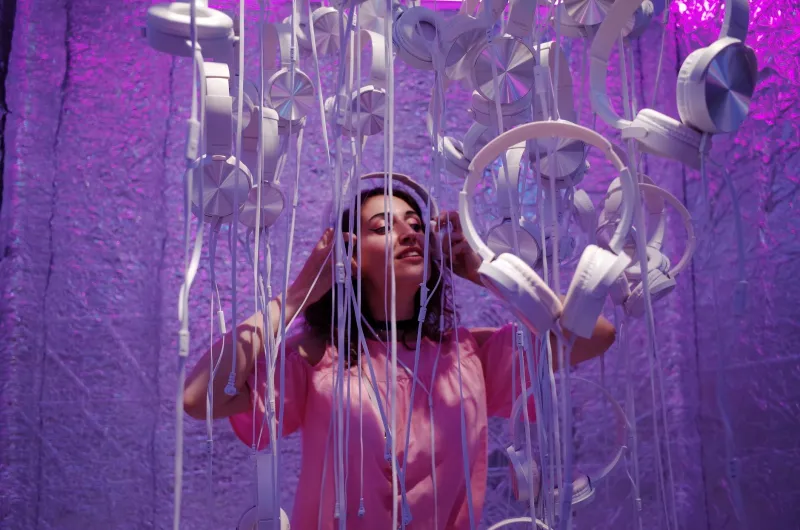
If there's one format where the canvas-to-speaker pipeline makes the most immediate sense, it's the sound installation. This is the space where visual and sonic thinking overlap most naturally — where you're literally constructing an environment that asks visitors to move through it, to inhabit it, to have a physical relationship with what they're experiencing.
American galleries and museums have been increasingly receptive to this kind of work over the past decade. The immersive art boom — yes, the one that gave us those Instagram-bait digital light shows — opened a lot of institutional doors, even if the work that's actually pushing things forward is considerably less flashy and considerably more demanding of your attention.
The best sound installations coming out of visual artists right now don't explain themselves. They don't have a placard that walks you through the concept. They just are, and you're in them, and something happens to you that you probably can't fully articulate afterward. That's the goal. That's always been the goal in serious visual art too — to make something that exceeds language. Sound just gives you another way to get there.
What Gets Lost, What Gets Found
It's worth being honest about the friction here. Not every visual artist who starts messing with sound produces something worth experiencing. The learning curve is real. The temptation to lean too hard on ambient clichés — the kind of washed-out drone that signals this is art without actually doing anything — is genuine and not always resisted.
And there's a legitimate question about whether crossing disciplines dilutes a practice or deepens it. Some artists find that working in sound clarifies what they were always trying to do visually. Others find it pulls focus. The ones who seem to navigate it best are the ones who don't treat the two practices as separate at all — who understand that they're always working on the same problem, just from different angles.
The American art scene, for all its noise and chaos and market pressures, has always had room for the person who refuses to stay in their lane. That's not a bug. That's the whole thing.
The Conversation Is Just Starting
We're still early in understanding what it means when a generation of visual artists decides that sound is part of their vocabulary. The work is out there — in galleries, in warehouses, in online archives, in the occasional record that gets released with no real promotional push and finds its audience anyway. It doesn't always have a clean label. It doesn't always know what shelf it belongs on.
But if you've been paying attention to where the most genuinely surprising creative energy is coming from in this country right now, you already know: it's coming from the people who decided that one medium wasn't enough to say what they needed to say.
The painters are making noise. It's worth listening.