When Sound Hits a Wall: Why Some American Artists Need a Canvas to Finish the Sentence
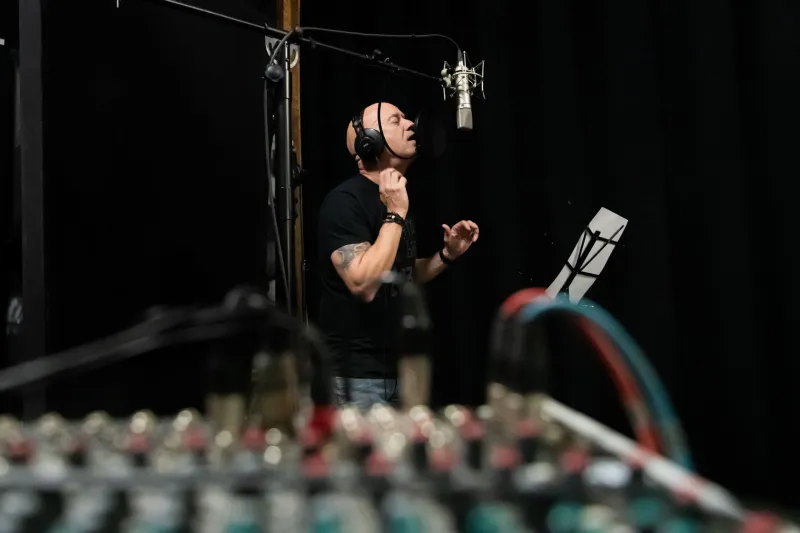
There's a moment some artists describe — and once you hear it, you can't unhear it — where a piece of music feels complete and somehow still unfinished. The melody resolves. The mix is locked. And yet something essential is still floating in the air, untranslated. Not every idea has the good manners to fit inside a speaker.
For a quietly growing number of American musicians and sonic artists, that leftover feeling isn't a sign of failure. It's a signal to pick up a different tool entirely.
The Idea That Refuses to Stay in One Medium
We tend to think of visual art and music as neighbors — related, friendly, occasionally collaborative. But for some artists, the relationship is less like neighbors and more like two halves of the same lung. The sound breathes in. The image breathes out.
Take the work happening in cities like Chicago, Los Angeles, and New Orleans, where a generation of musicians has been quietly building visual practices that aren't decorative and aren't promotional. They're not making album cover art. They're making the other side of the album — the part that couldn't be recorded.
This isn't a new impulse. David Bowie painted. Joni Mitchell painted. Miles Davis painted. But what's different now is the intentionality behind it. These artists aren't picking up a brush because they're bored between tours. They're doing it because they've identified a specific gap — a set of ideas that audio simply won't carry — and they're refusing to let those ideas die on the studio floor.
Sight and Sound as Dual Channels
The neuroscience here is interesting, even if most of these artists would never frame it that way. Our brains process sound and visual information through overlapping emotional circuitry. Certain feelings — dread, wonder, a specific kind of grief that has no name — get triggered more completely when both channels fire at once. Composers have always known this instinctively. It's why film scores work. It's why a concert with the right lighting feels different from the same concert in the dark.
But what these artists are exploring is something more personal than production design. They're asking: what if the visual component isn't support for the music, but an equal partner? What if the painting isn't illustrating the song — what if the painting is the rest of the song?
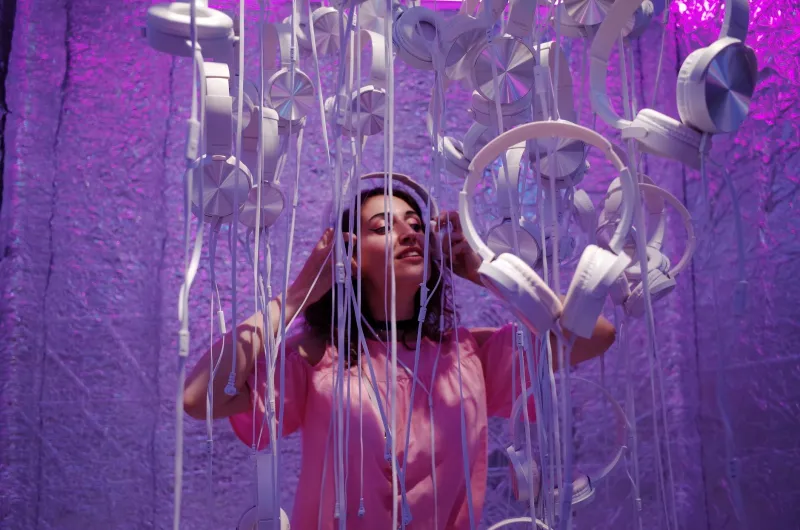
Artists working in installation spaces are particularly tuned into this. When you walk into a room where sound is emanating from somewhere you can't quite locate, and the walls are covered in work that seems to be responding to that sound — or maybe generating it — the experience is categorically different from listening through headphones. You're not just hearing something. You're inside something.
The Canvas as a Second Instrument
One useful way to think about this is through the metaphor of instrumentation. Every musician knows that some ideas belong to the piano and some belong to the guitar, even if both can technically play the same notes. The instrument shapes the idea. It limits it in ways that are generative.
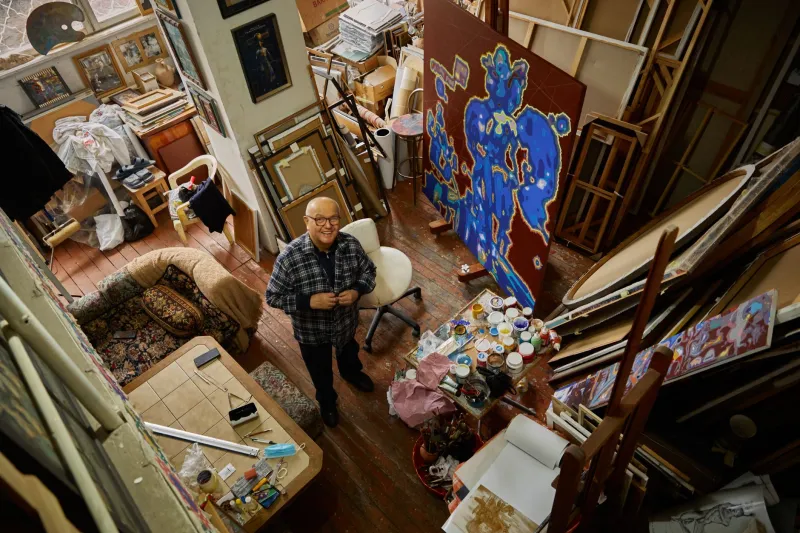
Visual art works the same way for musicians who've let themselves go there. Painting forces duration — you can't rush a canvas the way you can rush a mix. Sculpture introduces weight and gravity, physical properties that sound actively resists. Installation work introduces the body of the viewer in a way that recorded music almost never does. These aren't limitations. They're affordances. They let you say things that the studio won't let you say.
American artists working at this intersection often describe a kind of relief when they move between mediums. The pressure of the music — the expectation, the audience, the streaming numbers — lifts when they're in the studio with paint on their hands. And paradoxically, that relief seems to feed back into the music. The two practices aren't competing. They're circulating.
What the Visual Work Actually Carries
So what kinds of ideas end up in the paintings and the sculptures rather than the songs?
From conversations with artists working this way, a few themes emerge. Stillness is one. Music exists in time — it begins, it moves, it ends. A painting doesn't. For ideas that need to be held rather than experienced as a sequence, the canvas is the right container.
Ambiguity is another. Songs, even abstract ones, tend to pull the listener toward interpretation. A melody suggests emotion. A lyric suggests narrative. Visual art can sustain a more open-ended kind of meaning — something the viewer has to complete themselves, without the music doing the emotional work for them.
And then there's scale. Some feelings are simply too large for a three-minute song. Not in terms of complexity, but in terms of volume — the emotional square footage they require. A painting on a twelve-foot wall, or a room you walk through, can hold that size in a way that a recording, no matter how immersive, often can't.
Why This Matters Beyond the Art World
If you're a listener rather than a maker, this might seem like an inside conversation — interesting, but not exactly urgent. But there's something here worth paying attention to.
We're living through a moment when music is more accessible than it's ever been and, in some ways, more disposable than it's ever been. Streaming culture rewards the quick hit, the immediately legible, the song that tells you exactly how to feel within the first fifteen seconds. Artists who are building visual practices alongside their music are, in part, pushing back against that. They're insisting on work that takes more time. Work that can't be skipped.
There's also something quietly radical about an artist who refuses to let a medium define the boundaries of their expression. The musicians who've walked into a gallery or a warehouse and started making physical things aren't abandoning sound. They're defending it — insisting that what sound points toward is real enough to deserve a second form.
The Unfinished Sentence
Back to that moment. The mix is locked. The music is done. And something is still floating.
For the artists who've learned to follow that feeling into a different medium, what comes next isn't a detour. It's the continuation of the same thought — just in a language that doesn't need speakers to be heard. Some ideas are patient enough to wait for the right form. The ones that matter usually are.
And maybe that's the thing worth sitting with: not every creative idea is born knowing what it wants to be. The best ones keep asking until they find out.