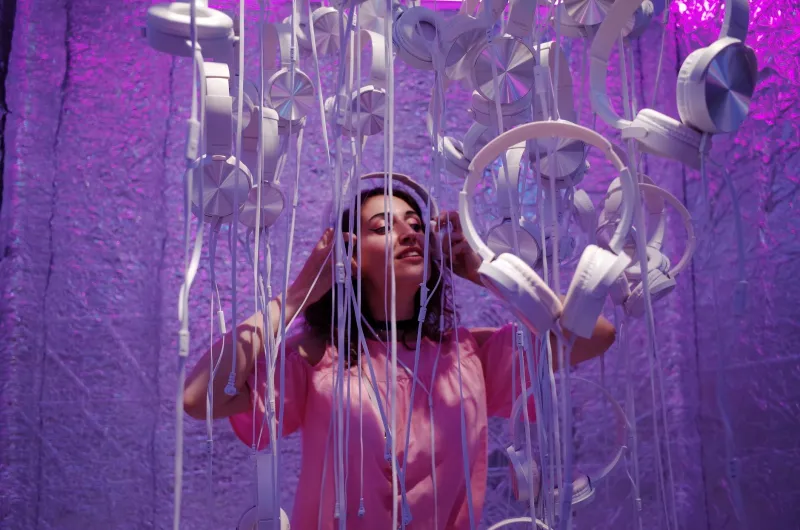
Some Albums Don't Open Until You've Lived a Little More

Some Albums Don't Open Until You've Lived a Little More
You remember the first time, probably. You'd heard the hype, or a friend had pressed the CD into your hands like it was contraband, or the algorithm dropped it into your queue with suspicious confidence. You pressed play. And then... nothing. Maybe mild confusion. Maybe the uncomfortable feeling that everyone else was in on something you weren't. You moved on.
And then, months or years later — maybe you were driving through a weird stretch of highway in Nevada, or folding laundry at 1am, or just sitting with headphones in because the world got too loud — it came back around. And this time, something cracked open.
That experience has a name now, loosely. People call it the "slow burn." But that phrase undersells what's actually happening. It's not just that the album grows on you. It's that you grew into it.
The Psychology of the Delayed Click
There's a real cognitive thing going on when a piece of music doesn't land immediately. Our brains are pattern-recognition machines, and when something doesn't fit a familiar template — when the chord progressions feel off, when the production is deliberately abrasive, when the song structures refuse to resolve the way pop has trained us to expect — we register it as noise rather than signal.
But here's the thing: that friction is often the point.
Some records are built like puzzles where the box has no picture on the front. You don't know what you're assembling until you've sat with enough pieces. The first listen gives you edges. The second gives you a corner. By the fifteenth, you're starting to see a face you recognize — maybe even your own.
This isn't a new phenomenon, but it feels more urgent now. We live in a moment where a song has roughly thirty seconds to prove itself before a thumb swipes it into oblivion. Streaming platforms have optimized for immediacy. Playlists reward familiarity. The whole infrastructure of how we consume music in America is built around the instant reaction, the hot take, the first impression. Which means the slow burn album is basically swimming upstream.
The Records That Made People Wait
Ask around — really ask — and you'll find that almost every serious music listener has at least one album that took them years to understand. It's a near-universal experience that almost never gets talked about, probably because admitting it feels like confessing you missed something obvious.
For a lot of American listeners, Joni Mitchell's The Hissing of Summer Lawns was that record. Ignored and even panned when it dropped in 1975, it was too weird for country, too loose for pop, too literary for radio. Critics called it self-indulgent. Decades later, it's regularly cited as one of the most sophisticated American albums ever made. The people who love it now will tell you there was a specific moment — usually tied to a specific life event — when it stopped sounding scattered and started sounding like a map of something they were living through.
More recently, Kendrick Lamar's To Pimp a Butterfly had that effect on a huge swath of listeners who bounced off its jazz-heavy, sprawling structure after expecting something closer to good kid, m.A.A.d city. The album debuted to critical adoration but also genuine confusion from casual fans. Years later, it regularly tops "greatest albums of the decade" lists. The listeners who came back to it often describe the re-entry as almost disorienting — like the album had been waiting patiently for them to be ready.
What Patience Actually Costs
Here's the uncomfortable part of this conversation: patience has a price, and in a culture built on volume and velocity, most people never pay it.
The opportunity cost of ignoring an album after one listen isn't just missing a great record. It's missing whatever that record might have done to you — the way it might have reframed something you were feeling, or introduced you to a sound you'd spend the next decade chasing, or simply given you a private world to disappear into when the public one got too heavy.
That's not a small thing to lose. And we lose it constantly, quietly, every time we skip to the next thing because the current thing didn't immediately reward us.
There's also a class dimension to this worth naming. Revisiting albums takes time, and time is distributed unequally. Someone working two jobs doesn't have the leisure to give a challenging record fifteen listens over six months. The slow burn is, in some ways, a luxury — which makes it worth being intentional about when you do have the space to practice it.
The Listener's Journey Is the Story
What's interesting about slow-burn albums is that the listener ends up being the protagonist of the story, not the artist. The artist made the thing and let it go. What happens next is entirely about whoever picks it up.
That's a genuinely unusual dynamic in American pop culture, where we love a good origin story — the tortured artist, the creative breakthrough, the behind-the-scenes drama. We're less comfortable centering our own experience as the meaningful part of the equation.
But the moment an album finally clicks for you is a biographical event. It marks something. People remember where they were. They remember what was happening in their lives. They remember the specific track that finally opened the door. That's not nothing — that's the music doing exactly what music is supposed to do, just on a longer timeline than the algorithm prefers.
How to Actually Let an Album Find You
This isn't really about discipline or forcing yourself to listen to difficult things. That approach tends to produce resentment, not revelation. What seems to actually work — based on how people describe their slow-burn experiences — is more passive than that.
You let the album exist in your life without demanding that it perform for you. You put it on while you're doing something else. You return to it in different moods, different seasons, different versions of yourself. You don't chase the click — you just stay available for it.
And then one day, without warning, the whole thing rearranges itself into something you understand. Not because the album changed, but because you did.
That's the deal with the best records. They're not trying to meet you where you are. They're waiting at a place you haven't gotten to yet.
The only question is whether you're willing to make the trip.