Wrong Turn, Right Place: How American Artists Stumbled Into Their Greatest Work
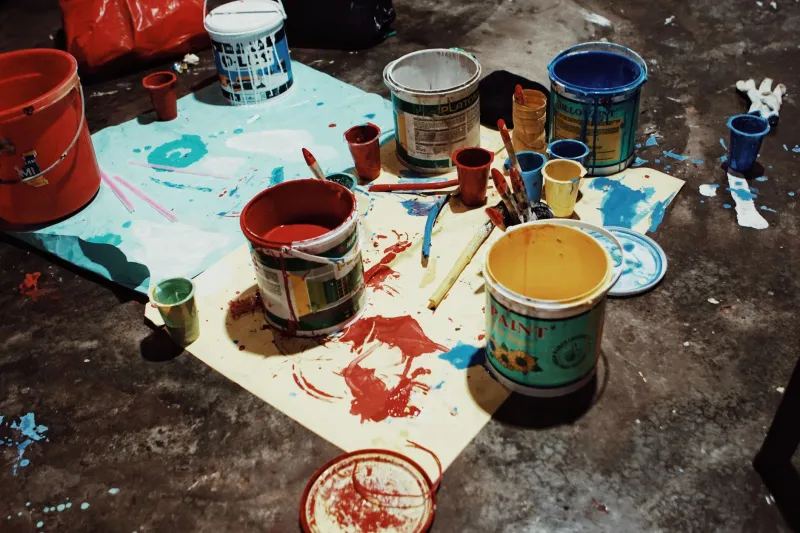
There's a version of the creative process that looks great on paper. You've got your concept, your references, your mood board pinned to the wall. You know exactly what you're making. And then — somewhere between the first draft and the fifth revision — something breaks. Something you didn't plan for crawls in through the window and makes itself at home.
For a lot of artists, that's where the panic sets in. For the ones who made history, that's where the real work began.
Let's talk about accidents. Not the kind that end careers, but the kind that start them over.
The Myth of the Master Plan
We love a clean origin story. Artist has vision. Artist executes vision. Vision becomes iconic. It's tidy, it's inspiring, and it's mostly fiction.
The truth is messier and way more interesting. A lot of what we now call "intentional" was actually improvised after something went wrong. The mythology gets smoothed out in interviews, in press releases, in documentary retrospectives where everyone sounds like they knew exactly what they were doing all along. They didn't. And that's the whole point.
Brian Eno — who has shaped the sound of American music from the outside in, collaborating with everyone from David Bowie to Talking Heads to U2 — built an entire philosophy around this. His Oblique Strategies card deck was literally designed to force artists off their original path. The idea wasn't to sabotage the work; it was to acknowledge that the work often knows better than the artist does. When you're stuck, introduce a constraint. When you're too comfortable, introduce chaos. See what survives.
Eno called it "surrendering control in a strategic way." Most American artists just call it getting lucky. The difference is whether you're paying attention when it happens.
Tyler, the Creator and the Beauty of the Wrong Direction
Few American artists in the last fifteen years have been as deliberate about reinvention as Tyler, the Creator. But even Tyler — a guy who designs his own album artwork, directs his own videos, and curates his own festival — has talked openly about how his biggest creative leaps came from chasing something that didn't pan out.
Flower Boy didn't start as a confessional record. IGOR didn't start as a concept album about heartbreak. They evolved into those things through a process of trial, failure, and following the thread that kept pulling even when it didn't make sense yet. Tyler has described making music that surprised him — sitting at the keys and landing on a chord progression that felt wrong on paper but right in his chest. He went with the chest.
That's a skill, by the way. It looks like instinct but it's actually a kind of trained openness — the ability to recognize when the accident is better than the intention. Most people who sit down at a piano and hit a weird chord just hit it again until they find something familiar. Tyler built a genre out of the weird chord.
Visual Art and the Happy Mistake
This isn't just a music thing. Visual artists have been tripping into brilliance for as long as there's been a canvas to fall onto.
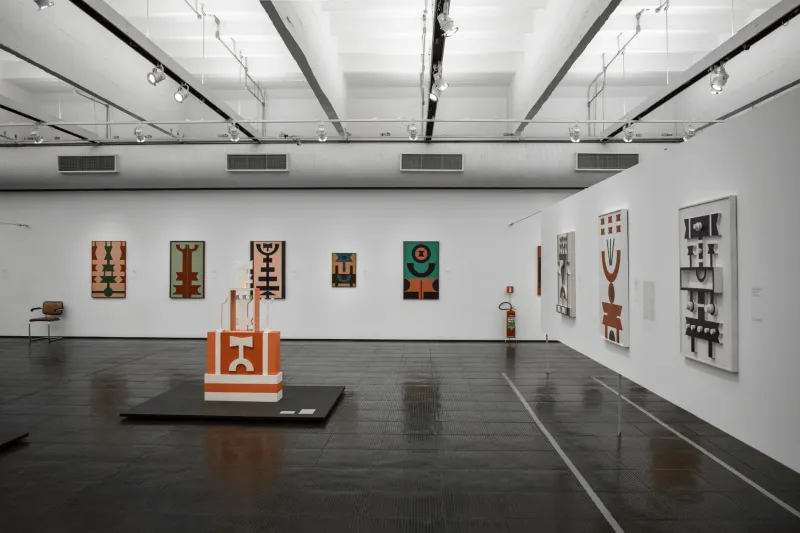
Jennifer Rubell, the American conceptual artist known for her large-scale participatory installations, has spoken about how her most resonant pieces emerged from practical problems she couldn't solve elegantly. When a concept didn't work the way she imagined, she'd start pulling at the failure to see what was underneath it. More often than not, the thing underneath was more honest — and more powerful — than the original idea.
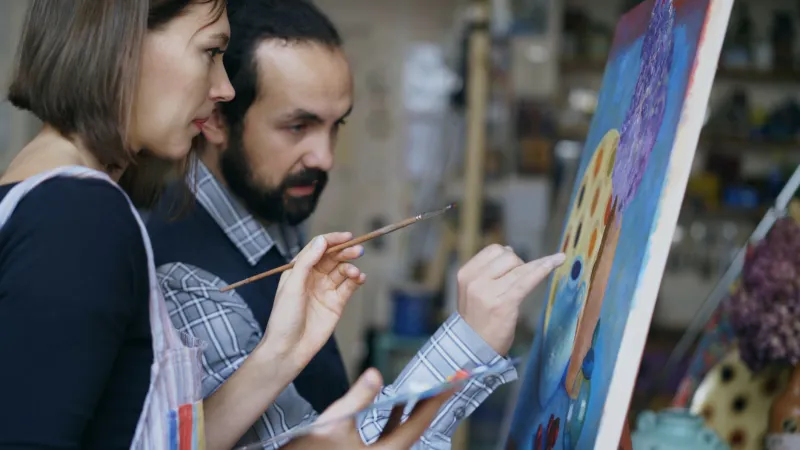
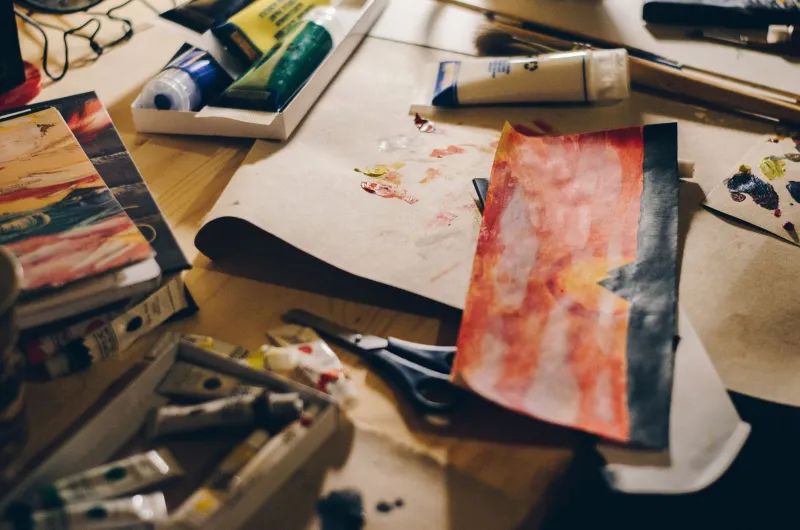
There's something about the visual arts specifically that rewards this kind of stumbling. Painters talk about it constantly — the moment a brush slips, a color bleeds, a texture does something unexpected, and suddenly the painting becomes something it wasn't supposed to be. The temptation is to fix it, to restore the original vision. The artists who matter usually resist that temptation.
Jackson Pollock didn't discover drip painting through careful planning. He discovered it by getting out of his own way. Whether you love the work or think it's overhyped, the methodology is undeniable: stop controlling the outcome and see what the material wants to do.
Why We're So Bad at Letting Go
Here's the uncomfortable part. Most of us — artists, musicians, writers, whatever your medium — are genuinely terrible at recognizing a good accident when it happens. We've been trained to measure success against intention. Did I make the thing I set out to make? If the answer is no, we call it a failure and move on.
But creative work doesn't operate on that logic. The gap between what you planned and what you made isn't always a deficit. Sometimes it's where the actual art lives.
The problem is ego. Not ego in the pejorative sense, but ego in the basic sense of authorship — the need to feel like you made a choice, that your hand was on the wheel. Accidents threaten that narrative. They suggest the work happened to you instead of coming from you. And that's a genuinely uncomfortable place to sit.
The artists who keep stumbling into brilliance are the ones who've made peace with that discomfort. They've stopped needing to fully own the process in order to fully own the result.
Serendipity as a Practice
Here's the thing nobody tells you in art school: you can actually get better at being lucky. Not in some mystical, manifest-your-destiny way — in a practical, repeatable way.
You do it by staying in the room long enough for the accident to happen. You do it by not quitting the session when things go sideways. You do it by keeping the weird take, the off-key note, the smeared line, long enough to actually look at it before you erase it.
Brian Eno again: the best creative decisions often feel like mistakes at the time. The job isn't to avoid them. The job is to know which ones to keep.
American creative culture has a complicated relationship with failure. We celebrate the comeback story, the pivot, the glow-up — but we're still pretty bad at celebrating the actual moment of falling down. We want the redemption arc without the embarrassing middle part.
But the embarrassing middle part is where the accidental masterpiece lives. It always has been.
The Takeaway
If you're making something right now — a record, a painting, a film, a zine, whatever — and it's starting to not look like what you thought it would look like, don't panic. Or panic a little, fine. But then look at what you actually have instead of what you were trying to make.
Sometimes the wrong turn is the road.
The artists who built careers on that lesson didn't get lucky more than everyone else. They just stayed curious longer. They let the accident breathe before they swept it up.
And a lot of the time, the accident was the whole point.